
Prototype, Bridge, and Production: Three Different Jobs
Engineers often talk about "ordering more parts" as if quantity were the only variable. In practice a prototype run, a bridge run, and a production run are three different manufacturing jobs, with different goals, different economics, and different risks. Knowing which one you are actually buying, and when to move from one to the next, is the difference between a smooth ramp and a budget overrun.
This guide explains how cost per part falls with quantity, how setup amortization works with a worked example, when CNC machining stops being the right process, and what has to be in place (design freeze, fixtures, first article inspection) before a part can be called production-ready. It closes with a practical look at how low-volume CNC machining in China fits into that ramp.
Defining the Three Stages
Prototype run: 1 to 10 pieces
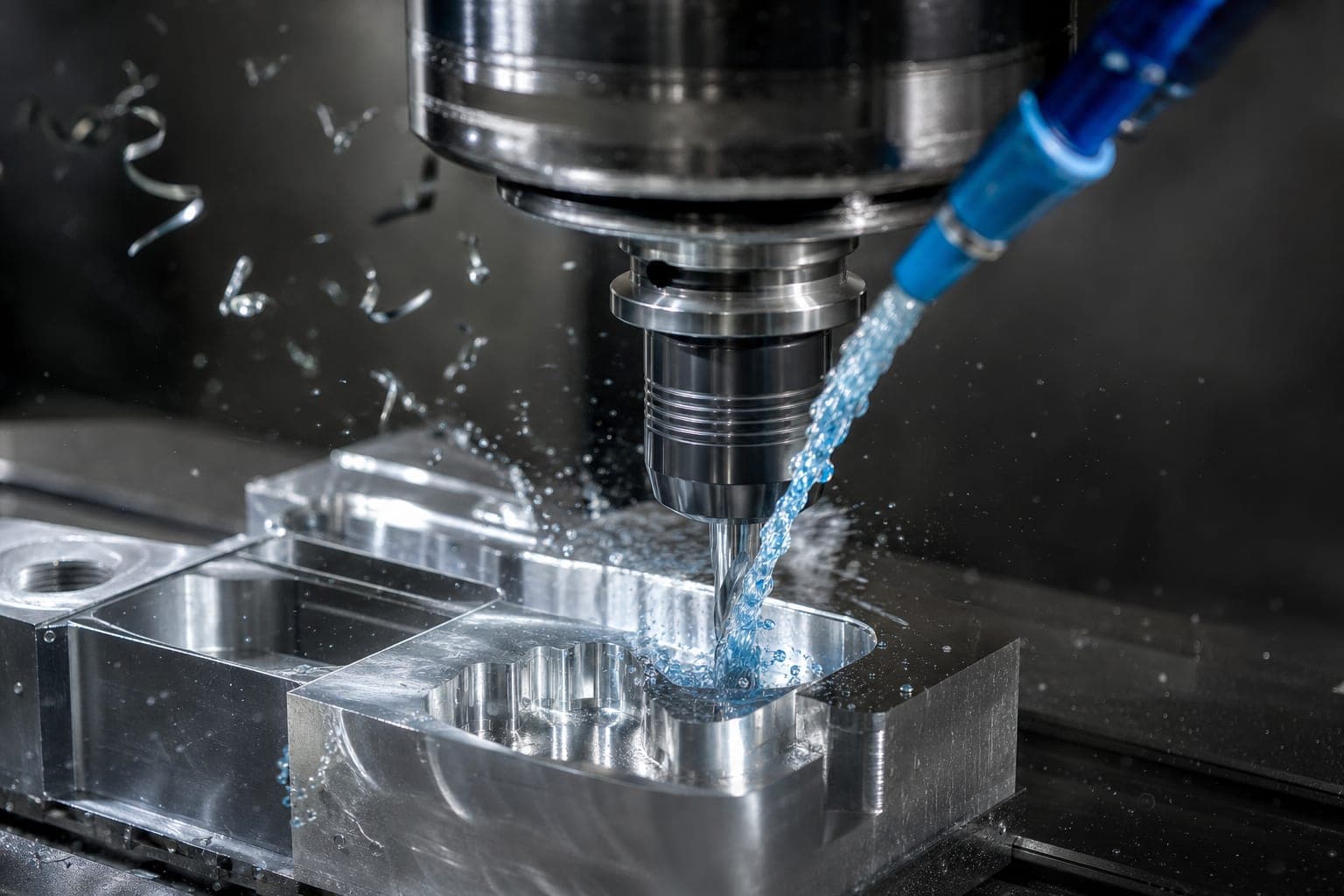
The goal is learning. You want to hold the part, test fit, run it on a bench, and find the problems. Speed matters more than unit price. Designs change between batches, so nothing should be invested in dedicated fixtures or tooling. Parts are typically made from stock billet on a 3-axis or 5-axis mill with simple vise or tab workholding, and inspection is targeted at the features you are unsure about. Our prototype CNC machining service is built around this stage: no MOQ, quotes in 24 hours, and parts in 5 to 10 days.
Bridge run: 10 to 500 pieces
The goal is revenue or field testing before the high-volume process is ready. Maybe a mold is still being cut, a casting pattern is in approval, or demand is real but uncertain. Bridge production uses the same CNC process as prototyping but with a frozen design, a fixture that holds several parts at once, a stable CAM program, and batch-level inspection. Unit prices drop substantially from the prototype stage, but the process is still flexible enough to absorb a late design change without scrapping expensive tooling.
Production run: 500 pieces and up, repeating
The goal is lowest stable cost at a guaranteed quality level. Everything is optimized: multi-part fixtures or pallet systems, roughing from near-net blanks, dedicated gauges, statistical inspection, and a locked process sheet. For many parts this stage still means CNC machining. For others it means switching to a forming process and machining only the critical features.
The Cost-per-Part Curve
Unit cost for a machined part has two components: a fixed cost that is paid once per batch, and a variable cost that is paid once per piece.
- Fixed (setup) cost: CAM programming, fixture design and build, tool selection and presetting, first-piece proving, and inspection plan. This is the same whether you make 1 piece or 1,000.
- Variable (run) cost: material, machine time per piece, tool wear, deburring, finishing, and per-piece inspection.
Unit cost is simply fixed cost divided by quantity, plus variable cost. The result is a curve that falls steeply at first and then flattens. The flattening point is where the variable cost dominates, and beyond it, only process changes (faster cycle times, cheaper blanks, different manufacturing methods) can move the price.
Worked example, in ranges
Take a medium-complexity aluminum 6061 bracket, roughly 120 x 80 x 30 mm, with two tapped holes, one H7 bore, and black anodize. Typical industry numbers for a part like this, expressed as ranges, look approximately like the table below. Your actual numbers will differ, but the shape of the curve is what matters.
| Quantity | Setup cost spread per part | Run cost per part | Approximate unit price |
|---|---|---|---|
| 1 | $150 to $300 | $40 to $70 | $190 to $370 |
| 5 | $30 to $60 | $35 to $60 | $65 to $120 |
| 25 | $6 to $12 | $25 to $45 | $31 to $57 |
| 100 | $1.50 to $3 | $18 to $35 | $20 to $38 |
| 500 | $0.30 to $0.60 | $14 to $28 | $14 to $29 |
Notice two things. First, the jump from 1 to 25 pieces divides the price by roughly five or six. Second, the jump from 100 to 500 changes the price by only 25 to 35 percent, and almost all of that comes from the run cost falling (multi-part fixtures, optimized toolpaths, bulk material) rather than from setup amortization. At 500 pieces the setup cost is nearly invisible. This is why "can we get it cheaper at 2,000?" often gets a disappointing answer from a machine shop: beyond a few hundred pieces, the machine cycle time is the price, and the only way to reduce it substantially is a different process.
The quote calculator lets you test several quantities on your own geometry to see where your part's curve flattens.
When to Move from Prototype to Bridge
Move when the following are true. If any one is false, you are still prototyping, even if you are ordering 50 pieces.
- The design has stopped changing in ways that affect machining. Cosmetic tweaks are fine. Moving a bore or changing a wall thickness is not.
- You have at least one tested prototype that passed its functional test. A bridge run of an untested design is just an expensive prototype run.
- You know the material and finish for certain. Switching from 6061 to 7075, or from anodize to powder coat, changes the process enough to require re-proving.
- Demand is real enough to justify a fixture. A multi-part fixture might cost the equivalent of 5 to 20 prototype parts. If you are not confident of ordering more than that, stay with single-part setups.
When to Move from Bridge to Production
The bridge stage ends either because the volume and repeat cadence justify full CNC production optimization, or because a different process becomes cheaper. Signals to watch:
- Orders are repeating on a predictable schedule (monthly, quarterly) rather than arriving as one-off bursts.
- Cumulative quantity has reached the point where per-part machining cost has flattened and the curve will not fall further.
- The customer or your quality system now requires documented process control: PPAP-style packages, control plans, capability studies, batch traceability.
- Inventory cost is beginning to matter, so you want smaller, more frequent batches at a stable price rather than one big run.
When CNC Machining Is No Longer the Right Process
CNC machining is the most flexible way to make a metal part, but it is subtractive: you pay for every cubic millimeter removed. At some quantity, a process that forms the shape first and machines only what matters becomes cheaper. Typical crossover ranges, as industry rules of thumb:
| Alternative process | Typical tooling investment | Typical crossover quantity | Still needs CNC for |
|---|---|---|---|
| Investment casting (steel, stainless) | Moderate | 500 to 2,000 per year | Bores, threads, datum faces |
| Die casting (aluminum, zinc) | High | 5,000 to 20,000 per year | Sealing faces, tight bores, threads |
| Closed-die forging (steel, aluminum) | High | 2,000 to 10,000 per year | All precision features |
| Plastic injection molding | Moderate to high | 1,000 to 5,000 per year | Usually none, sometimes inserts |
| Extrusion plus cut and machine | Low | 500 to 2,000 meters | Cross holes, end features |
| Sheet metal stamping | Moderate to high | 5,000 plus | Tapped holes, precision bends |
Three observations. First, the crossover depends heavily on how much material machining removes. A part machined from a 2 kg billet that ends up at 300 g crosses over to casting much earlier than a part that removes only 20 percent of its stock. Second, switching processes almost never eliminates machining; it reduces it to the critical features, and the finished casting or forging still comes to a shop like ours for milling or turning of bores, faces, and threads. Third, tooling lead times for molds and dies are typically 4 to 10 weeks, which is exactly the gap a bridge run fills.
A common mistake is moving to casting too early on a design that is still changing. A mold revision can cost more than the entire bridge run it was meant to replace. When in doubt, run one more bridge batch on CNC and lock the design against real field data before cutting steel.
Design Freeze: The Gate Everyone Skips
A design freeze is a formal decision that the drawing revision in hand is the one that will be built, and that any further change requires a documented engineering change with cost and schedule impact. Without it, the shop cannot invest in fixtures, the CAM program cannot be locked, and every batch is effectively a new first article.
Practically, a freeze means: one revision letter on the drawing and the STEP file, a tolerance review completed (the shop has confirmed it can hold every callout), finish and material confirmed with suppliers, and any DFM changes accepted and incorporated. From that point the drawing is the contract. If you need to change it, you issue a new revision and the shop re-quotes only what changed.
Fixtures: The Investment That Makes Bridge Runs Work
In prototyping, a part is held in a vise, machined on one side, flipped, and machined on the other. Each flip is a manual operation with its own small positional error. For bridge and production runs, the shop builds a fixture: a plate or tombstone that locates several parts at once against fixed datums, so the machine runs unattended through a whole batch with consistent positioning.
Fixtures do three things for you. They cut per-part machine time by reducing load and unload cycles. They improve batch consistency because every part sits in the same place relative to the same datums. And they make re-orders cheap, because the fixture and program are stored and the next batch starts from a proven setup. Fixture cost is usually quoted separately as a one-time charge or amortized into the first batch; ask which, so your unit price comparisons are fair.
First Article Inspection and Batch Consistency
First Article Inspection (FAI) is the formal proof that the process, as set up, makes a part that matches the drawing. The shop machines the first piece (or first few) from the production fixture and program, measures every dimension on the drawing, typically on a CMM, and documents the result against each callout. The customer reviews and approves before the rest of the batch runs. At OrangeSea CNC we issue CMM and FAI reports on request, and we recommend them at the start of every bridge run and whenever a revision changes.
Batch consistency is what FAI protects. Once the first article is approved, the goal is that piece 200 measures the same as piece 1. The shop achieves that through the frozen program, the fixture, tool wear monitoring (replacing inserts on a schedule rather than on failure), in-process checks on critical dimensions, and temperature control for tight tolerance work. For repeat orders, ask for a dimensional report per batch on the critical features so you can trend them over time.
For the tolerance side of this, a standard of ±0.01 mm with ±0.005 mm on critical features is achievable on bridge runs without specialty equipment, but only when the drawing identifies which features are critical. A drawing that marks everything critical will be both slower and less consistent, because inspection time balloons and attention is spread thin.
How China Low-Volume Machining Fits the Ramp
Overseas engineers used to think of China purely as a high-volume source. That is no longer accurate. Shops like ours, with 18 CNC machining centres and 20 CNC lathes under one roof, are set up specifically for the 1 to 500 piece range, where the economics below are the ones that matter.
- No MOQ means the prototype-to-bridge transition happens with one supplier. The same shop that made your 3 prototypes makes your 50 bridge parts from the same program, which removes a re-qualification step.
- Machine time is the dominant cost beyond 25 pieces, and lower machine hour rates shift the whole curve down rather than only the setup portion. That is why the advantage persists into the hundreds, not only at volume.
- Lead time of 5 to 10 days plus express freight is competitive with domestic shops for bridge batches, particularly when domestic shops are booked weeks out on production work.
- Documentation travels with the parts. ISO 9001:2015 certification, CMM and FAI reports, material certs, and NDAs by default address the quality and IP concerns that historically made engineers hesitate.
- Incoterm flexibility (EXW, FOB, DDP) means a bridge batch can be landed at your door with duties paid, so purchasing compares a single landed number against the domestic quote.
Where China low-volume machining fits less well: parts needing same-day turnaround, parts with export-controlled drawings, or parts where the freight cost of a very heavy steel component outweighs the machining saving. For everything else in the prototype and bridge range, it is worth a quote. Our process page describes how files, DFM, FAI, and shipping are handled end to end.
A Practical Ramp Plan
- Prototype (1 to 5 pieces): vise setup, general tolerances except on the features under test, targeted inspection, expect to iterate two or three times.
- Design freeze: single revision, DFM accepted, material and finish locked, critical features identified on the drawing.
- Bridge batch 1 (25 to 100 pieces): fixture built, program locked, FAI with CMM report, batch dimensional report on critical features.
- Bridge batches 2 to N: repeat from stored setup, per-batch reports, trend critical dimensions.
- Decision point: if volume is stable and the per-part curve has flattened, either optimize CNC production further or begin tooling for casting, forging, or molding, while bridge batches continue to cover demand during the 4 to 10 week tooling lead time.
Ready to Plan Your Ramp?
Whether you need three prototypes next week or a bridge run of 200 while your mold is being cut, send your STEP file and drawing to our quote page. You will receive quantity-tiered pricing, DFM feedback, and a proposed inspection plan within 24 hours, from a Shenzhen shop that has been supporting engineers in more than 40 countries since 2013.
Tags
Related Services & Resources
Ready to Machine Your Parts?
Upload your CAD files and get a detailed quote within 24 hours. No hidden fees, no surprises.
Get a Free Quote →