
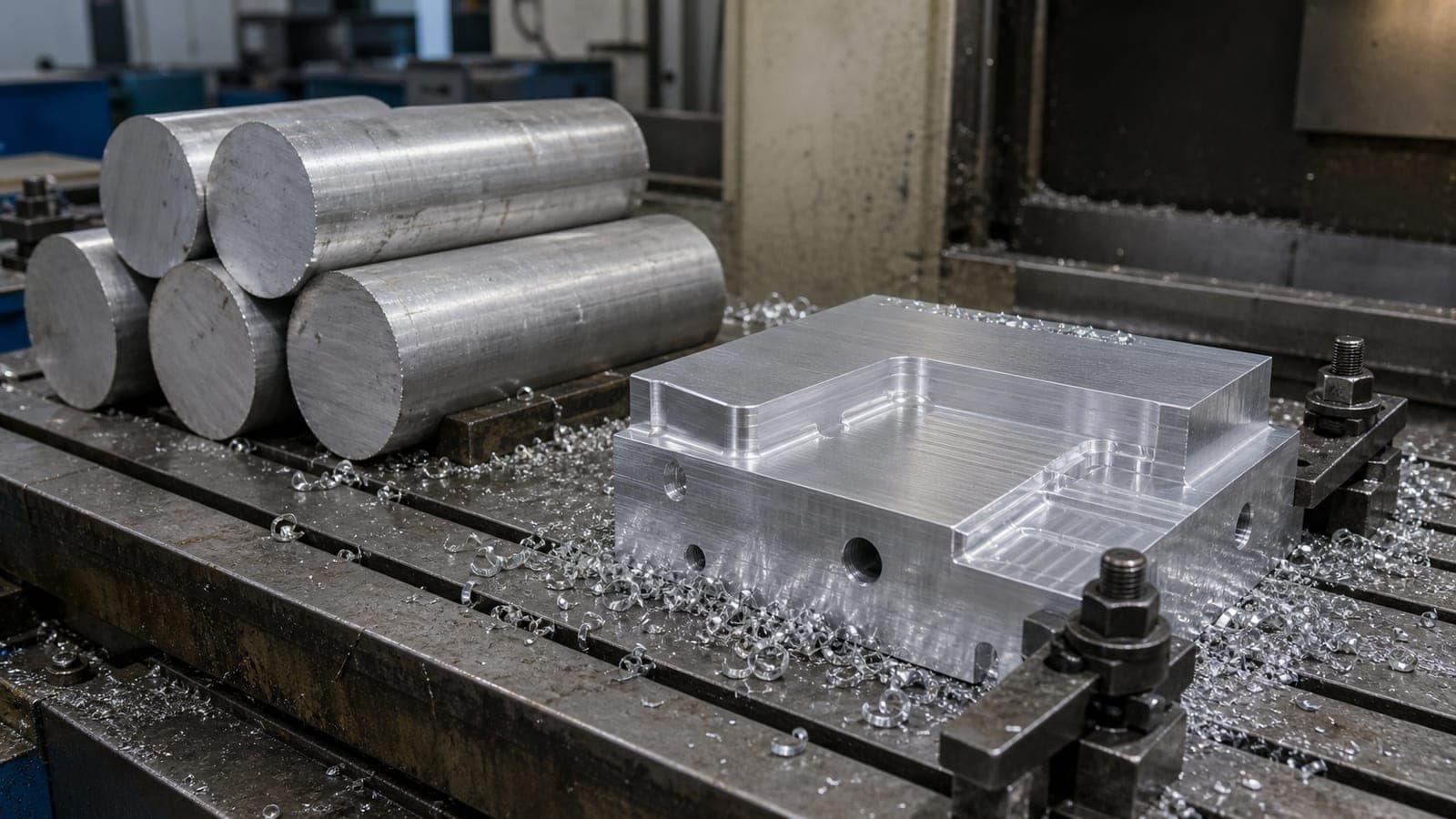
Aluminum is the material we machine more than any other. Its low density, high thermal conductivity, natural corrosion resistance, and outstanding machinability make it the first choice for engineers designing enclosures, brackets, heat sinks, manifolds, and structural parts across aerospace, robotics, electronics, and automotive programs. Because aluminum cuts quickly and predictably, it also delivers the lowest cost per part of any metal at a given level of complexity, which is why most new designs start here.
OrangeSea CNC has machined aluminum from our Shenzhen facility since 2013. We run 18 CNC machining centres, including 3, 4, and 5-axis equipment, and 20 CNC lathes for turned aluminum components, all under an ISO 9001:2015 quality system. Standard tolerance on aluminum parts is ±0.01 mm, and we hold ±0.005 mm on bearing bores, locating pins, and sealing faces where the drawing asks for it. Every part is CMM-inspected before it ships, and a First Article Inspection report is available for programs that need documented validation.
The three alloys below cover the large majority of requests. If you need a grade that is not listed, such as 2024 for fatigue-critical aerospace parts or 6082 for European-spec structures, tell us in the quote request and we will source it. Send a STEP file and drawing, and you will have a DFM-reviewed quote within 24 hours, with parts typically machined, finished, and shipped EXW, FOB, or DDP in 5 to 10 days.
Alloy Selection
Aluminum Grades We Machine
Aluminum 6061-T6
Good strength, excellent corrosion resistance, easy to weld and anodize. The default choice for enclosures, brackets, fixtures, heat sinks, and structural parts.
Full 6061-T6 data sheet →Aluminum 7075-T6
Nearly twice the strength of 6061 at almost the same weight. Used for airframe brackets, UAV structures, motorsport uprights, and high-load tooling.
Full 7075-T6 data sheet →Aluminum 5052-H32
Excellent formability and saltwater corrosion resistance. Chosen for machined sheet components, marine hardware, tanks, and panels that are bent as well as cut.
Request a 5052 quote →Capabilities
Why CNC Machine Aluminum?
Fastest Material to Machine
Aluminum cuts at high spindle speeds with low tool wear, so cycle times and per-part cost are lower than any steel of similar complexity.
Tight Tolerances as Standard
Good thermal stability and stiffness let us hold ±0.01 mm across a part and ±0.005 mm on bores and datums without special measures.
Excellent Surface Finish
Ra 0.8 µm is routine with standard carbide tooling, and finer finishes are achievable for cosmetic and sealing surfaces.
Anodizing Ready
6061 and 7075 anodize predictably to Type II colour or Type III hard coat, producing a wear-resistant, non-conductive surface.
Light and Strong
At roughly one third the density of steel, aluminum parts save weight in drones, robots, vehicles, and hand-held devices.
Always in Stock
We hold 6061 and 7075 bar and plate in common sizes so prototype and production orders start without a material lead time.
Use Cases
What We Machine in Aluminum
Processes
How We Machine Aluminum Parts
Prismatic aluminum parts such as housings, plates, and brackets are produced on our CNC milling centres. Parts with features on several faces, compound-angle ports, or sculpted surfaces move to 5-axis machining, where a single clamping keeps every feature in position relative to the others. Shafts, spacers, bushings, and threaded aluminum components run on our CNC turning lathes, many with live tooling so cross-holes and flats are finished in the same setup.
Aluminum responds well to high spindle speeds and sharp, polished carbide tooling. We control heat and chip evacuation with flood coolant and through-tool coolant on deep holes, which prevents the built-up edge that otherwise degrades surface finish on gummy grades. Large plates are rough machined, allowed to relax, and then finish machined so residual stress from rolling does not pull the part out of flatness after it leaves the fixture. Thin-walled enclosures are machined with light finishing passes and supported workholding to keep walls straight and tolerances intact.
After machining, parts are deburred and inspected on a CMM against the drawing. Anodizing, chromate conversion, bead blasting, and powder coating are applied to the surfaces marked on the drawing, with threads and press-fit bores masked where required. Whether you need one prototype or a repeat batch of five hundred, the same program, fixture, and inspection plan are used, so every delivery matches the last.
Engineering Tips
Design for Machining in Aluminum
Keep wall thickness at 0.8 mm or above for 6061 and 1.0 mm for 7075 to avoid distortion and chatter on thin features.
Specify internal corner radii of at least 1/3 of the pocket depth so a rigid cutter can reach the floor without deflection.
Call out anodizing on the drawing with the masked areas marked; anodize adds thickness that matters on press fits and threads.
Use 6061 unless the load case demands 7075; it is cheaper, easier to weld, and anodizes with more consistent colour.
Add a thread insert note (Helicoil or similar) for tapped holes that will be assembled and disassembled repeatedly.
State the temper (T6, T651, H32) so we source the right stock and plan stress relief on large plates.
Surface Options
Aluminum Finishes
FAQ
Aluminum Machining Questions
Which aluminum alloys do you CNC machine?
What tolerances can you hold on aluminum parts?
Can you anodize aluminum parts after machining?
How quickly can you deliver aluminum CNC machined parts?
Is it cost effective to source aluminum CNC parts from China?
Get Started
Ready to Machine in Aluminum?
Upload your design files and get a detailed quote within 24 hours. Tolerances to ±0.01 mm, no minimum order, ships worldwide from Shenzhen.