
Precision Service
CNC Turning
Precision lathe turning for shafts, bushings, and cylindrical parts — from Ø2 mm to Ø350 mm, all materials.
Overview
What is CNC Turning?
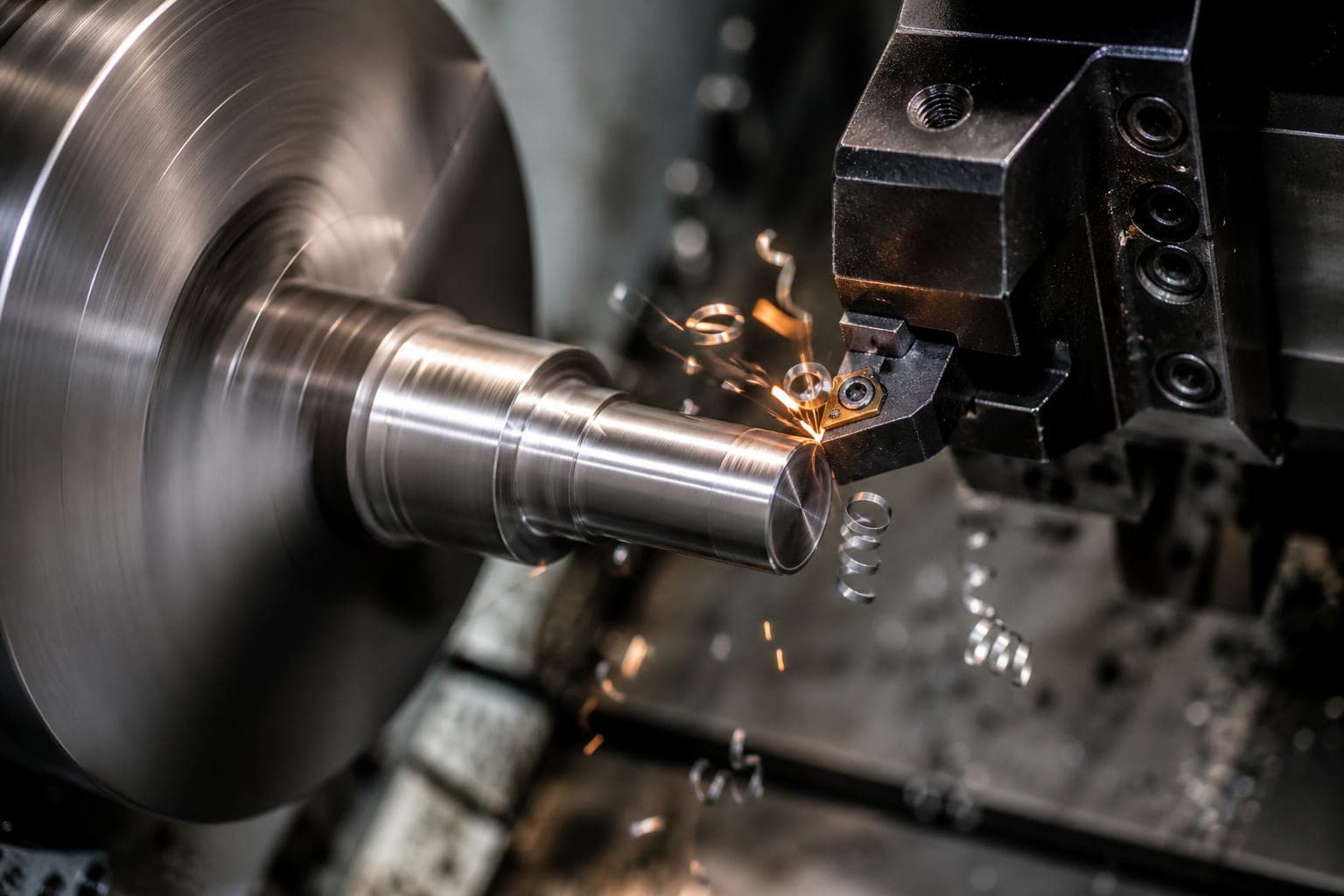
CNC turning uses a lathe where the workpiece rotates at high speed while a precisely controlled cutting tool removes material. The result is parts with near-perfect cylindrical geometry — shafts, pins, bushings, bearings, and threaded components that require concentricity and surface finish achievable only through precision turning.
Modern CNC lathes with live tooling go further, adding milling, drilling, and tapping capabilities to the lathe platform — enabling complex turned parts with off-centre features all in one setup. Our mill-turn centres combine 5-axis milling with turning for maximum complexity and minimum lead time.
What We Offer
Turning Capabilities
CNC Lathe Turning
2-axis turning for shafts, bushings, and round components to ±0.005 mm.
Live Tooling
Milled features, cross-holes, and flats machined in a single chucking.
Swiss Turning
Long, slender parts (medical pins, shafts) with length-to-diameter ratios up to 100:1.
Threading
Internal and external threads, multi-start threads, and Acme/buttress profiles.
Large Diameter
Bar stock up to Ø350 mm, between centres length up to 1,500 mm.
Turning + Milling
Mill-turn centres combine turning and milling operations for complex rotational parts.
Technical Specifications
Industry Applications
Who We Turn For
Aerospace
Shafts, landing gear pins, hydraulic cylinders, bushings
Medical
Bone screws, cannulated screws, surgical pins, implant stems
Automotive
Crankshafts, camshafts, axle stubs, bearing races
Oil & Gas
Valve stems, coupling bodies, pipe fittings, drill collars
Robotics
Motor shafts, harmonic drive components, encoder hubs
Industrial
Bearing journals, spacers, sleeves, precision rollers
How It Works
Our Turning Process
Material Selection
Bar stock, billets, or forgings selected and certified to your specification.
CAM Programming
Turning toolpaths programmed with Mastercam or Fusion 360 for optimal cycle times.
First-Off Setup
Tool offsets, datum setting, and first-article CMM inspection before production runs.
Production Run
Automated bar-fed turning with statistical process control for consistent results.
Secondary Ops
Grinding, keyway cutting, coating, or threading as required by your drawing.
Final Inspection
Full dimensional report, surface finish check, and material certs included.
FAQ
Common Questions
Supported Materials
What We Can Turn
Click any material for full specifications and machinability notes.
Surface Finishes
Post-Processing Options
Every turned part ships with documentation
CMM dimensional report · Material certificate · Certificate of Conformance · First Article Inspection (FAI) on request.
Get a CNC Turning Quote
Upload your STEP file or drawing. DFM review included. Detailed quote within 24 hours.