
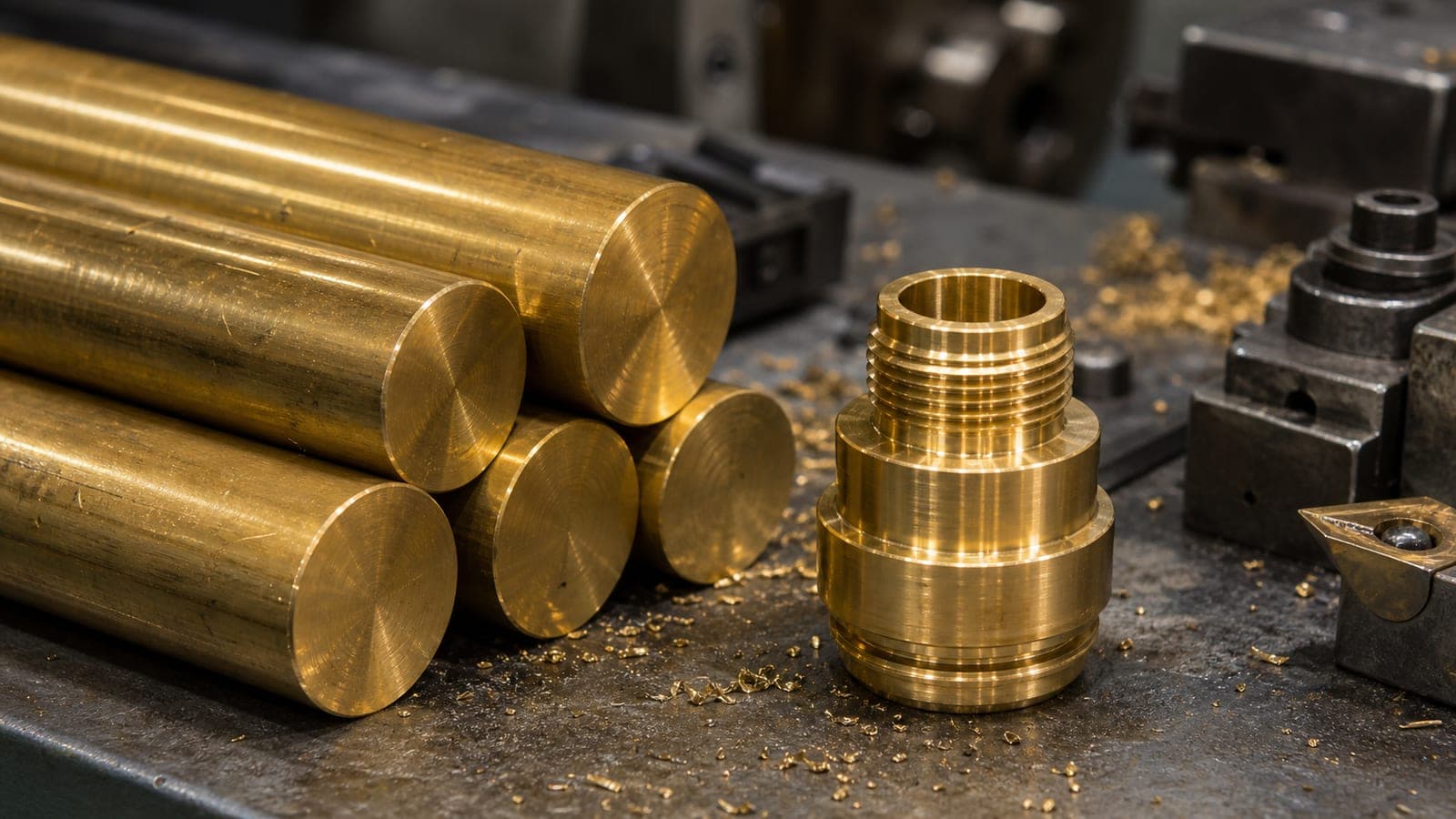
C360 free-machining brass (also known as 360 brass or 'free-cutting brass') has the highest machinability rating of any commonly machined metal — higher even than aluminium. Its unique combination of lead content (which acts as a chip-breaker), zinc, and copper produces extremely fine chips, minimal tool wear, exceptional surface finish, and cycle times that make it the lowest-cost-per-part material for complex turned components. Naval brass adds tin for improved corrosion resistance in seawater environments. Brass is the standard material for valve bodies, pipe fittings, electrical connectors, marine hardware, and any application requiring corrosion resistance and cosmetic appearance in a single, easily machined package.
Technical Data
Material Properties
Capabilities
Why CNC Machine Brass?
Fastest Cycle Times
C360 machines at the highest speeds and feeds of any metal — translating directly to lowest cost per part on turned components.
Excellent Surface Finish
Naturally fine chip formation and low cutting forces produce Ra 0.4 µm finishes as standard — no special tooling or slow passes required.
No Tool Wear
Lead content lubricates the cutting action — carbide tooling lasts dramatically longer on brass than on steel or stainless.
Corrosion Resistant
Standard C360 resists most common environments. Naval brass (C464) adds tin for genuine seawater corrosion resistance on marine fittings.
Electroplating-Ready
Brass takes nickel, chrome, and gold plating readily — the substrate of choice for decorative and electroplated connectors and hardware.
Use Cases
What We Machine in Brass
Engineering Tips
Design for Machining — Brass
Specify C360 for purely machined parts — it's the fastest and cheapest. Specify C464 (naval brass) only when seawater exposure is involved
Brass is soft and marks easily — part handling and packaging matters for cosmetic components. Specify 'cosmetic finish' if appearance is critical
C360 contains lead — do not use for potable water contact in some jurisdictions (check local regulations). Lead-free brass (C69300) is available as an alternative
Brass threads are excellent — fine-pitch threads machine cleanly and hold well. Self-tapping brass inserts are commonly used in plastic assemblies
Surface Options
Available Finishes
Related Materials
Get Started
Ready to Machine in Brass?
Upload your design files and get a detailed quote within 24 hours. Tolerances to ±0.01 mm, ships worldwide from Shenzhen.