
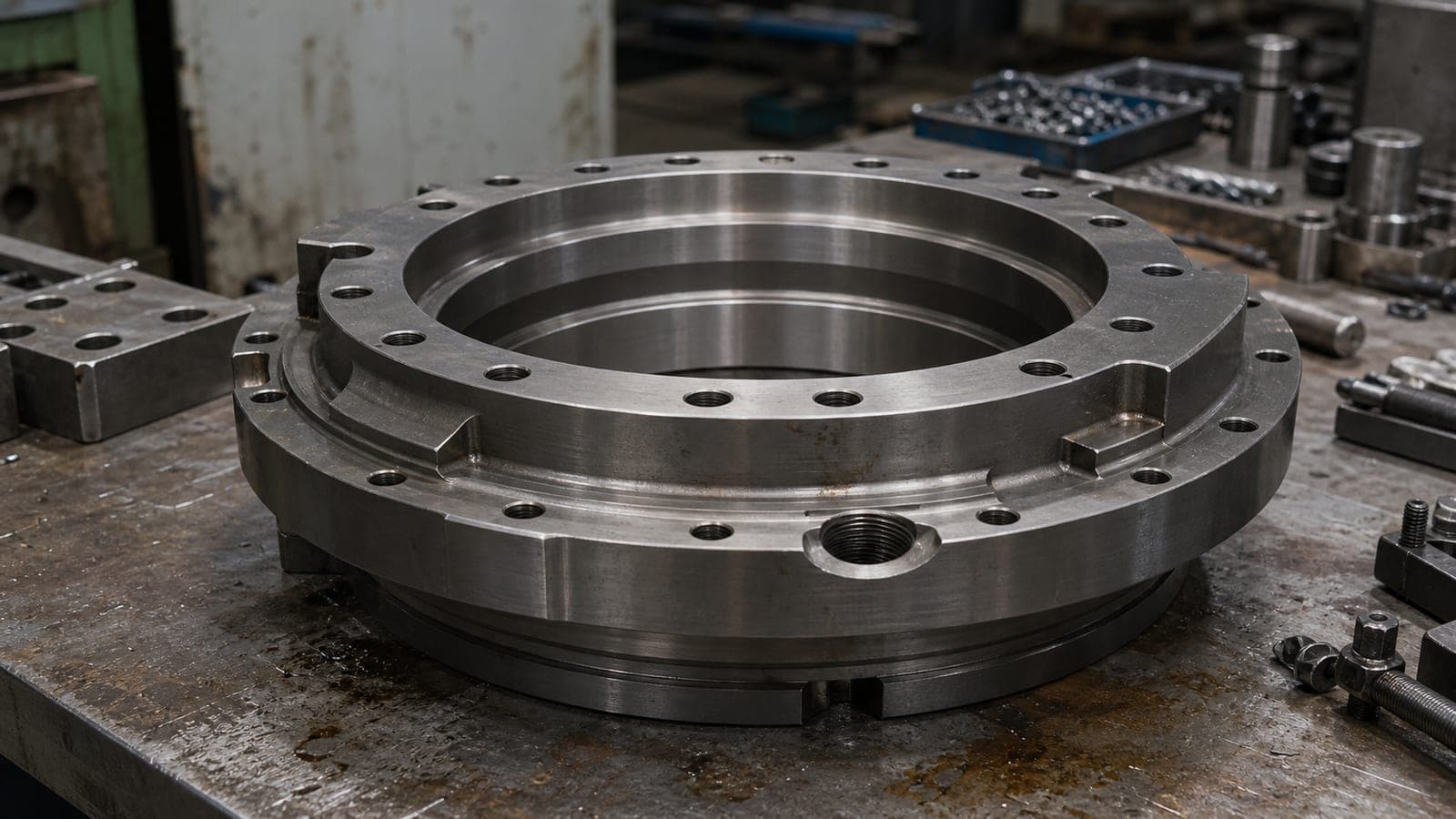
Inconel 718 is a nickel-chromium superalloy developed for gas turbine components that must maintain full strength at temperatures that would cause other alloys to creep and fail. It is arguably the most difficult material to machine in common engineering use — it work-hardens on contact, generates extreme cutting heat (low thermal conductivity, 11.4 W/m·K), and wears carbide tooling at a rate 5–10× faster than stainless steel. Every 'CNC machine shop' can cut Inconel. Very few can cut it repeatedly to tight tolerances without excessive scrap, tool breakage, and unpredictable cycle times. OrangeSea CNC machines Inconel 718 and 625 to aerospace and energy standards daily — with documented feeds, speeds, tooling brands, and coolant pressures that deliver first-time quality.
Technical Data
Material Properties
Capabilities
Why CNC Machine IN-718?
Proven Daily Process
We machine Inconel every working day. Our CAM engineers have optimised toolpaths, tooling selection (ceramic and CBN inserts), cutting data, and coolant strategy for IN718 and IN625.
Extreme Temperature Parts
No other common alloy retains strength and resists creep at temperatures up to 700°C — essential for gas turbine, jet engine, and downhole oil tool applications.
Oxidation Proof
Inconel 718 forms a stable, adherent oxide layer that resists further oxidation up to 980°C — components function without coating in high-temperature oxidising environments.
Material Traceability
All Inconel supplied with full Mill Test Reports, heat lot certs, and chemical composition reports. AMS 5662/5664 spec sourcing available for aerospace orders.
Third-Party Inspection
We welcome customer TPI and DNV/BV/SGS inspection witnesses for critical Inconel orders. Our facility and documentation meet aerospace and energy audit expectations.
Use Cases
What We Machine in IN-718
Engineering Tips
Design for Machining — IN-718
Machine in the annealed (solution-treated) condition where possible — aged Inconel is significantly harder and faster to work-harden
Ceramic cutting inserts (SiC or Si3N4) are preferred for roughing at high speeds — carbide for finishing passes. Never use HSS
Use high-pressure coolant (70+ bar) directed precisely at the cutting edge — heat is the primary cause of tool failure in Inconel machining
Never dwell in the cut — a stopped cutter in contact with Inconel causes immediate work-hardening and probable tool failure on restart
Budget for 5–10× tooling consumption compared to stainless 316L. Per-piece price reflects this — cheaper quotes usually reflect inadequate tooling strategy
Surface Options
Available Finishes
Related Materials
Get Started
Ready to Machine in IN-718?
Upload your design files and get a detailed quote within 24 hours. Tolerances to ±0.01 mm, ships worldwide from Shenzhen.