
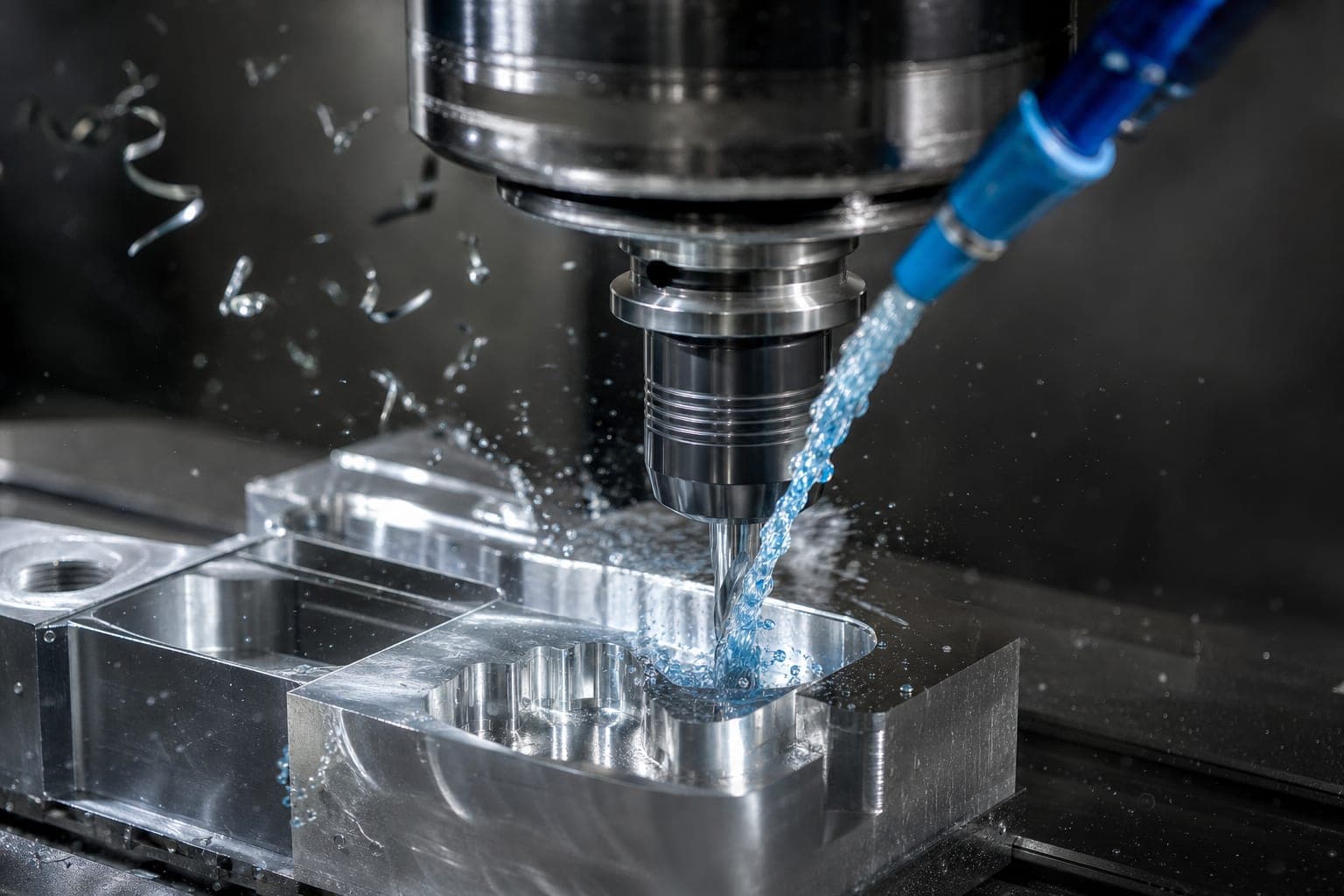
What CNC Manufacturing Services Include
CNC manufacturing services is a broad term that covers any process where computer-controlled machines remove material from a workpiece to produce a finished part. The most common CNC manufacturing processes are CNC milling, CNC turning, and CNC lathing — but a full-service CNC manufacturing company also provides laser cutting, waterjet cutting, metal fabrication, and quality inspection under one roof.
When buyers search for CNC manufacturing services, they are usually looking for one of three things: a prototype machined quickly, a small production batch of custom parts, or a long-term manufacturing partner for repeat orders. The right CNC manufacturing service provider can handle all three — but not all CNC shops are set up for every scenario.
The Core CNC Manufacturing Processes
CNC Milling uses a rotating cutting tool that moves across a stationary workpiece. Modern 5-axis CNC milling centres can approach the workpiece from virtually any angle, making them ideal for complex housings, brackets, aerospace structures, and any part that cannot be produced on a lathe. Tolerances of ±0.005 mm are routine on aluminium; ±0.01 mm is achievable on harder materials.
CNC Turning and CNC Lathing rotate the workpiece against a fixed cutting tool. This makes them the natural process for shafts, bushings, pins, and anything with a circular cross-section. A CNC lathe equipped with live tooling can also mill, drill, and tap in the same setup — combining what used to be two CNC manufacturing steps into one.
Laser Cutting and Waterjet Cutting are 2D CNC manufacturing processes used for sheet metal profiles, gaskets, and flat components. Laser cutting excels on metals up to 25 mm thick; waterjet cutting handles thicker materials (up to 200 mm) and heat-sensitive materials like carbon fibre, titanium, and glass without any heat-affected zone.
What to Look for in a CNC Manufacturing Service Provider
The most important criteria when evaluating CNC manufacturing services are not price — they are quality documentation, machine capability, and communication. Here is what experienced procurement engineers check:
ISO 9001 certification is the baseline. It means the CNC manufacturing company operates a documented quality management system. Without it, there is no guarantee that the same process that produced your first batch will produce your second. Ask for the certificate number and verify it is current.
CMM inspection capability means the shop can measure your parts against your drawing and produce a dimensional report. Many small CNC manufacturing shops use hand gauges only — this is insufficient for tolerances below ±0.05 mm or for any application where a customer requires documented proof of conformance.
Material traceability means the CNC manufacturing company can trace every piece of raw material back to its original mill certificate. This is mandatory for aerospace, medical, and defence parts and good practice for everything else.
CNC Manufacturing Services from China — What Has Changed
China's CNC manufacturing industry has undergone a transformation over the past decade. The narrative of "cheap but low quality" no longer applies to the leading Shenzhen-based CNC manufacturing companies. Equipment from Haas, Mazak, DMG Mori, and Makino is now common in Chinese CNC manufacturing facilities. ISO 9001 certification is standard. English-language project management, DFM reviews, and digital quality documentation are all available.
What has remained is the cost advantage. Comparable CNC manufacturing services in Shenzhen, China cost 30–60% less than equivalent services in the US, Germany, or the UK. For engineering teams that need to hit a cost target without compromising on dimensional accuracy or documentation, sourcing CNC manufacturing services from China is the standard solution — not the exception.
How to Place a CNC Manufacturing Order
The process for ordering CNC manufacturing services is simpler than most buyers expect. Upload your STEP or IGES file (or a 2D DXF for laser/waterjet cutting) along with your material specification, required tolerance, surface finish, and quantity. A qualified CNC manufacturing company will return a quote within 24 hours, often with a DFM (Design for Manufacturability) review that flags any features that would be expensive or difficult to produce.
For prototype CNC manufacturing orders, lead times of 5–7 working days are normal. Production runs of 100–500 pieces typically ship within 10–15 working days depending on complexity and material availability. Rush CNC manufacturing is available at most full-service shops for an additional fee.
Tags
Related Services & Resources
Ready to Machine Your Parts?
Upload your CAD files and get a detailed quote within 24 hours. No hidden fees, no surprises.
Get a Free Quote →